
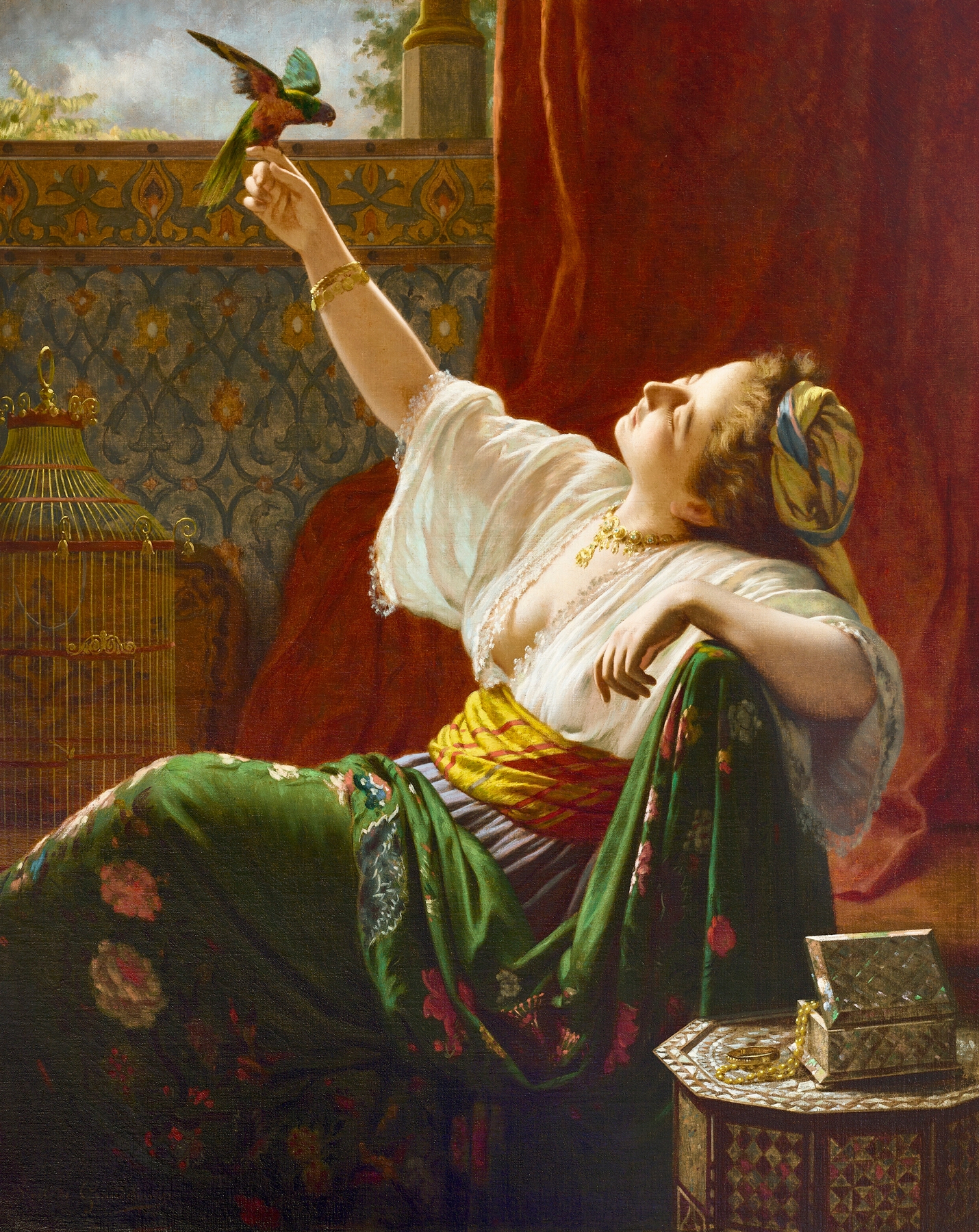
The Fetishisation and Exoticisation of the Oriental Woman in Western Paintings Mallak Hashem Edited by Grace Phillips The notion that is “Orientalism” was unequivocally a transient one, given that today, the East is often perceived as barbaric, contentious and uncivilised. Yet between the seventeenth and nineteenth centuries, the “Oriental” attitude, which denoted fascination with the…
Continue ReadingTag: feminism

“Is it truly Ithaca?”
Mia Sherry The long journey home in Nadine Labaki’s thematic trilogy Tackling trauma, identity and nationality through religion and tradition, Nadine Labaki’s thematic trilogy— Caramel (2007), Where Do We Go Now? (2011) and Capernaum (2018)— situates and contextualises these issues within the centrepiece of modern life: the home. ‘Home’ in Labaki’s films extends beyond the…
Continue Reading
Identity and Feminism in A Girl Walks Home Alone at Night
An exploration of Ana Lily Amirpour’s genre-defying film A Girl Walks Home Alone at Night is often referred to as the “first Iranian vampire spaghetti western”. Released in 2014, it premiered at the Sundance Film Festival and was American-Iranian filmmaker Ana Lily Amirpour’s feature film debut. It tells the story of a vampire, referred to…
Continue Reading
Postcolonial Voices
Constance Quinlan Fantasia, An Algerian Cavalcade by Assia Djebar Postcolonialism can be understood as “a multifaceted and open process of interrogation and critique […] a process, a way of thinking through critical strategies [between self and other]” (Hiddleston, 2009, p.4). Assia Djebar’s Fantasia is emblematic of this task. Her “literature forms a site of experimentation,…
Continue ReadingThe Biopolitics of Sex
Today biopower is everywhere. Since the beginning of the COVID-19 pandemic, biopolitical infrastructure has framed our existence, even dictated it. We depend on our politicians and our world leaders to incorporate critical aspects of human biology, including contagion, into their political agendas in order to keep society alive. Nevertheless, biopolitical motives are not always directly employed in a positive alliance with human welfare.
Continue Reading